Showing posts with label India's Foreign Policy. Show all posts

Tuesday, November 12, 2024

INDIA & CHINA AGREEMENT


·   


 India and China -

India has a strained relation with her neighbour, China, and henceforth maintained a neutral position in taking decisions concerning China. Moreover, the recent clashes that took place in 2020,between the two nations were due to territorial disputes. China had claimed that the de facto border, LAC, was under their governing territory and vice versa. Which then led to a face-off between the two armies of that region and caused deaths from both sides.

Looking from a vantage point, however, both of the nuclear neighbours have accused each other of trying to seize territory along their de facto border, also known as the Line of Actual Control(LAC).

 Agreement -

An agreement has taken place recently leading to a potential thaw to the hostility between both the neighbours. This agreement took place on the sidelines of the BRICS summit in the Russian city of Kazan at the end of October between the two heads of the state, Indian Prime Minister Narendra Modi and Chinese President Xi Jinping.

In a media briefing, Foreign Secretary of India Vikram Misri said that this agreement will resolute the remaining friction points between the nations.

·         Aftermath -

 After four years of territorial rivalry, related to the contested high-altitude border, the two nations have come to a temporary peace signalling to the de-escalation of tensions. An immediate aftermath of the agreement was the disengagement of 80 to 90 percent of the troops of both the nations from the Depsang and Demchok in Eastern Ladakh region. Patrolling Rights: The two sides have agreed on the modalities of patrolling along the LAC, paving the way for a reduction in tensions and a decrease in the number of troops deployed in the area.

Security experts in India accepted the latest agreement to de-escalate tensions, but remarked that Deep –seated mistrust between the neighbours will continue to strain the bilateral ties. 

·         Sources -

1. Image Courtesy: https://images.indianexpress.com/2024/10/Prime-Minister-Narendra-Modi-with-Chinese-President-Xi-Jinping-on-the-sidelines-of-the-BRICS-Summit-in-Kazan.-Photo-AP1.jpg?w=640

2. Information is referenced from the following website: https://www.dw.com/en/india-china-border-dispute-can-the-peace-last/a-70712678

 
Contributed by:
Arijit Singha Roy

Arijit is a Fifth semester student studying Political Science Hons. at Maynaguri College.

Wednesday, February 14, 2024

COP - 28 এ ভারতের ভূমিকা


৩০ নভেম্বর থেকে ১ ডিসেম্বর প্রধানমন্ত্রী নরেন্দ্র মোদি সংযুক্ত আরব আমিরশাহী রাষ্ট্রপতি এবং আবুদাবির শাসক মোহাম্মদ বিন জায়েদ আল নাহিয়ানের আমন্ত্রণে ওয়ার্ল্ড ক্লাইমেট একশন সামিটে যোগ দিতে সংযুক্ত আরব আমিরশাহীর দুবাই সফর করেছিলেন। ওয়ার্ল্ড ক্লাইমেট একশন সামিট হচ্ছে জলবায়ু পরিবর্তন সম্পর্কিত রাষ্ট্র সংঘ ফ্রেমওয়ার্ক। ২৮ নভেম্বর থেকে ১২ ডিসেম্বর পর্যন্ত অনুষ্ঠিত হলোCOP 28। এবারে এই সামিটে 200 টি দেশের ৭০০০০ প্রতিনিধি অংশগ্রহণ করেছিল। সংযুক্ত আরব আমিরশাহীর শিল্প ও অ্যাডভান্সড প্রযুক্তি মন্ত্রী তথা সংযুক্ত আরব আমিরশাহীর জলবায়ু পরিবর্তন সংক্রান্ত ও বিশেষ দূত সুলতান আহমেদ আল জাবেদ এই বৈঠকে সভাপতি দায়িত্ব পালন করেছিলেন।

এই সামিটের প্রধান বিষয়বস্তু: 

1. ২০৩০ সালের পূর্বে শক্তি স্থানান্তর এবং নিঃসরণ হ্রাস দ্রুততার সাথে ত্বরান্বিত করা।

2. জলবায়ু‌ অর্থায়ন রূপান্তর করুন।

3. সকলকে কনফারেন্স অফ পার্টিস এর উদ্দেশ্যে একত্রিত করা।

COP28 এ ভারতের ভূমিকা:

১ ডিসেম্বর প্রধানমন্ত্রী নরেন্দ্র মোদী দুবাইতে সংযুক্ত আরব আমিরশাহীর সভাপতিত্বে ২০২৩ সালের জাতিসংঘ জলবায়ু পরিবর্তন সম্মেলনcop 28 এর বিশ্ব জলবায়ু অ্যাকশন সামিটের উচ্চ পর্যায়ের বৈঠকে অংশ নিয়েছিলেন। উচ্চ স্তরের সেগমেন্ট এর উদ্বোধনে একটি বিশেষ ভাষণে প্রধানমন্ত্রী জলবায়ু লক্ষ্য পূরণের ভারতের উচ্চাকাঙ্ক্ষী জলবায়ু প্রতিশ্রুতি এবং অর্জন গুলি তুলে ধরেছিলেন। প্রধানমন্ত্রী বিশ্ব নেতৃবৃন্দকে গ্রিন ক্রেডিট ইনিশিয়েটিভ যোগদানের আমন্ত্রণ জানিয়েছিলেন। প্রধানমন্ত্রী দৃঢ় জলবায়ু পদক্ষেপের জন্য নেতাদের প্রতি আহ্বান জানান তিনি বলেন যে -

1. দেশগুলিকে অবশ্যই তাদের জলবায়ু প্রতিশ্রুতি পূরণ করতে হবে।

2. দেশগুলিকে একসঙ্গে কাজ করতে হবে বৈশ্বিক কার্বন বাজেট উন্নয়নশীল দেশগুলো ন্যায্য অংশ থাকতে হবে।

3. প্রধানমন্ত্রী ২০২৮ সালে ভারতে COP33 আয়োজন করার প্রস্তাব করেছিলেন।

এই সামিট সংক্রান্ত গুরুত্বপূর্ণ তথ্য:

1. ভারত এই বৈঠকে জীবাশ্ম জ্বালানি থেকে কার্বন নিঃসরণে তৃতীয় স্থানে উঠে আসে যা খুবই উদ্বেগের

2. এই সামিটে Loss and Damage তহবিল গঠনের সিদ্ধান্ত গৃহীত হলো, যার মূল্য ২৬০ মিলিয়ন মার্কিন ডলার

3. এই সামিটে COP 28 সভাপতিত্বে সূচনা করা হলো জলবায়ু , পুনরুদ্ধার এবং শান্তির ওপর ইউএই ঘোষণাপত্র।


Contributed by : 

Gargi Chakraborty


Gargi is a Sixth Semester student studying Political Science Hons. at Maynaguri College.

Source:  About COP 28 - UNFCCC

Link: https://unfccc.int/process-and-meetings/conferences/un-climate-change-conference-united-arab-emirates-nov/dec-2023/about-cop-28

Photo Credit: https://www.icao.int/environmental-protection/Pages/COP28.aspx

G20-তে ভারতবর্ষের ভূমিকা


১লা ডিসেম্বর 2022 সালে ভারতবর্ষের প্রধানমন্ত্রী নরেন্দ্র মোদী  ইন্দোনেশিয়ার কাছ থেকে এক বছরের জন্য G20 (Group of Twenty county) দায়িত্ব গ্রহণ করেছিলেন। G20 ভারতবর্ষের জন্য বিশেষভাবে গুরুত্বপূর্ণ কারণ ভারতবর্ষ একটি সংস্কৃতিপূর্ণ দেশ, যা বিশ্বমঞ্চে নিজস্ব সংস্কৃতিক বৈচিত্র উদযাপন এবং প্রদর্শন করতে পছন্দ করে।

Group of Twenty country (G20) হল একটি আন্তর্জাতিক ফোরাম যা বিশ্বব্যাপী অর্থনৈতিক  প্রবৃদ্ধি এবং স্থিতিশীলতা সম্পর্কিত বিষয়ে আলোচনা ও সমন্বয়ের জন্য বিশ্বের বৃহত্তম অর্থনীতির নেতাদের একত্রিত করে। দ্রুততম বর্ধনশীল প্রধান অর্থনীতিগুলির মধ্যে একটি হিসেবে এই ফোরাম ভারতের একটি গুরুত্বপূর্ণ ভূমিকা রয়েছে।

ভারতবর্ষ ১৯৯৯ সালে একটি প্রতিষ্ঠিতা সদস্য হিসাবে G20 - তে যোগদান করেছিল  এবং বছরের পর বছর ধরে ভারতবর্ষের অংশগ্রহণের গুরুত্ব বেড়েছে। সম্প্রতিক বছরগুলিতে ভারতের অর্থনীতি গড়ে ৬-৭% হারে বৃদ্ধি পাচ্ছে।

বৈশ্বিক অর্থনৈতিক বৃদ্ধিতে ভারতবর্ষ অবদান রাখতে পারে নিজেস্ব অভ্যন্তরীণ নীতির মাধ্যমে। ভারতবর্ষের সরকার বিদেশি বিনিয়োগ আকৃষ্ট করতে, পরিকাঠামো উন্নত করতে এবং উদ্যোক্তাদের উন্নতি করার জন্য গত কয়েক বছরে একাধিক অর্থনৈতিক সংস্কার বাস্তবায়ন করেছে। এই সংস্কারের ফলে বিদেশী বিনিয়োগ বৃদ্ধি পেয়েছে এবং অর্থনৈতিক প্রবৃদ্ধি হয়েছে।  উদাহরণস্বরূপ, ভারত সরকার ‘Make in India’ উদ্যোগ চালু করেছে। উৎপাদনকে উন্নতি করতে এবং কর্মসংস্থান সৃষ্টির জন্য, ডিজিটাল পরিকাঠামো উন্নত করতে তাছাড়া প্রযুক্তিতে সহজে আদানপ্রদানের জন্য ‘Digital India’ প্রচারণা চালু করেছে। অনান্য G20 অন্তর্ভুক্ত দেশগুলির সাথে নিজেস্ব অভিজ্ঞতা ভাগ করে নেওয়ার মাধ্যমে ভারতবর্ষ অনান্য অর্থনৈতিক অনুরূপ নীতি গ্রহণ এবং বিকাশকে ত্বরান্বিত করে চলছে।

বিভিন্ন G20 অন্তর্ভুক্ত দেশগুলির সাথে ভারতবর্ষ জড়িত থাকার ফলে বিশ্বব্যাপী অর্থনৈতিক বৃদ্ধিতে সাহায্য করে থাকে, তাছাড়া মুক্ত বাণিজ্যের একজন দৃঢ় প্রবক্তা হিসাবে ভারতবর্ষ উন্মুক্ত এবং অন্তর্ভুক্তিমূলক বাণিজ্য ব্যবস্থাকে উন্নত করতে অনান্য G20 দেশগুলির সাথে কাজ করতে পারে যা সমস্ত দেশ বিশেষ করে উন্নয়নশীল দেশের অর্থনৈতিক ব্যবস্থাকে উপকৃত করে।

ভারতবর্ষ বিশ্ব বাণিজ্য সংস্থা (WTO) এর সদস্য এবং কৃষি, পরিষেবা, বুদ্ধিভিত্তিক সম্পত্তির অধিকারের মতো বিভিন্ন বানিজ্য বিষয় নিয়ে আলোচনায় জড়িত। ভারতবর্ষ এই আলোচনায় নিজেস্ব অভিজ্ঞতা ব্যবহার করে  G20 -এ আলোচনায় অবদান রাখতে এবং একটি নিয়ম ভিত্তিক বানিজ্য ব্যবস্থা প্রচার করে চলছে।

বৈশ্বিক আর্থিক ব্যবস্থায় আর্থিক স্থিতিশীলতা এবংসংস্কারের প্রচারেও ভারতবর্ষ গুরুত্বপূর্ণ ভূমিকা পালন করে চলেছে। ভারতবর্ষ ব্যাংকিং খাতে সাম্প্রতিক বছরগুলিতে উল্লেখযোগ্য সংস্কার করেছে,  যার ফলে ব্যাংকিং খাতে উন্নতি সাধিত হয়েছে।

এই ক্ষেত্রে ভারতের অভিজ্ঞতা অন্যান্য G20 দেশগুলির কাছে মূল্যবান হতে পারে, বিশেষ করে যারা আর্থিক খাতের সংস্কার এবং স্থিতিশীলতার সাথে লড়াই করছে।

উপরন্তু, ভারতবর্ষের ক্রমবর্ধমান নবায়নযোগ্য শক্তি বিভাগ বিশ্বব্যাপী অর্থনৈতিক বৃদ্ধি এবং স্থায়ীত্বের অবদান রেখে চলছে। ভারতবর্ষ তার শক্তির অংশ বাড়ানোর লক্ষ্য নির্ধারণ করেছে এবং এই ক্ষেত্রে ভারতবর্ষের অভিজ্ঞতা অনান্য G20 দেশগুলির জন্য উপযোগী হতে পারে কারণ তারা আরও টেকসই শক্তি ব্যবস্থায় রুপান্তর করতে চায়।

ভারতবর্ষ নবায়নযোগ্য শক্তির প্রচারের জন্য বেশ কিছু উদ্যোগ চলো করেছে যেমন- আন্তর্জাতিক সৌর জোট, যার লক্ষ ২০৩০ সালের মধ্যে সৌর শক্তি $১ ট্রিলিয়ন বিনিয়োগ সংগ্রহ করা এবং জাতীয় ক্লিন এনার্জি ফান্ড, যা ক্লিন এনার্জি প্রকল্পে অর্থায়ন করে। অনান্য G20 দেশগুলির সাথে তার অভিজ্ঞতা ভাগ করে নেওয়ার মাধ্যমে ভারতবর্ষ আরও টেকসই শক্তি ব্যবস্থায় রুপান্তরকে ত্বরান্বিত করতে এবং বিশ্বব্যাপী পরিবেশগত স্থায়িত্ব উন্নত করতে সাহায্য করে চলেছে।

অনান্য G20 দেশগুলির সাথে ভারতবর্ষ নিজেস্ব অভিজ্ঞতা ভাগ করে নেওয়ার মাধ্যমে এবং আন্তর্জাতিক বাণিজ্য, আর্থিক স্থিতিশীলতা এবং স্থায়িত্ব সম্পর্কিত বিষয়ে সহযোগিতা মূলকভাবে কাজ  করে আসছে।

Contributed by:

Tanmoy Chakraborty

Tanmoy is a Sixth Semester student studying Political Science (Hons.) at Maynaguri College.

 Source Links:

https://timesofindia.indiatimes.com/blogs/voices/indias-role-in-the-g20-how-it-can-contribute-to-global-economic-growth-and-stability/

https://moes.gov.in/g20-india-2023/moes-g20?language_content_entity=en#:~:text=As%20it%20takes%20the%20G20,a%20sustainable%20way%20of%20living

 Photo credit - https://images.app.goo.gl/UNmXFyyxCeSZxbso8

Friday, February 9, 2024

India rejects Canada’s ‘poll interference’ claim, rebuts ‘Ottawa meddling in country’s internal affairs’


Rejecting Canada’s allegations of Indian interference in the country’s elections as “baseless,” New Delhi on Thursday said it is not India’s policy to interfere in the democratic process of other countries.

Targeting Ottawa, MEA Spokesperson Randhir Jaiswal, addressing a press briefing, asserted that “on the reverse side, it was Canada which has been interfering in India’s internal affairs.”

We have seen media reports of Canadian Commission inquiring into foreign interferences… we strongly reject such baseless allegations of Indian interference in Canadian elections. It is not the Government of India’s policy to interfere in the democratic process of other countries, in fact, quite on the reverse, it is Canada which has been interfering in our internal affairs,” he said.

India's ties with Canada may have undergone a tonal shift in recent days says Justin Trudeau.

Meanwhile, the Canadian Security Intelligence Service in its report has alleged that China sought to “clandestinely and deceptively influence” its last two federal elections, whilst also naming India as a foreign interference threat. This top-secret briefing report obtained by Global News also stated that the Canadian government “must do more” to fight foreign interference.

The Foreign Interference activities of the People’s Republic of China are significant, pervasive, and directed against all levels of government and civil society across the country,” the report stated. 

On the “foreign interference of India”, the report predicted that the problem could worsen and “we must do more to protect Canada’s robust democratic institutions and processes.” 

India was the only country mentioned in the report aside from China. Although three pages of the report were devoted to India, they were entirely redacted later to just say a single sentence: “India engages in FI activities.

Contributed by:

Sohan Dey

Sohan is a second semester student studying Political Science (Hons.) at Maynaguri College.

Source: The Indian Express

Link: https://indianexpress.com/article/india/india-rejects-canada-poll-interference-claim-9151133/


ভারতীয় পণ্য বয়কট' ও 'ইন্ডিয়া আউট' প্রচারণা বাংলাদেশে দানা বাঁধছে যে কারণে

বাংলাদেশের কিছু  সামাজিক যোগাযোগ মাধ্যম থেকে সাম্প্রতিক জানা যায় যে,বাংলাদেশে “ইন্ডিয়া আউট” নামে ভারত বিরোধী একধরনের প্রচার লক্ষ্য করা যাচ্ছে। সেখান “পণ্যসহ” ভারতীয় পণ্য বয়কট নিয়ে নানা প্রচারণা চালানো হচ্ছে।

গত সপ্তাহ দুয়েক বিভিন্ন নেট মাধ্যম থেকে এ প্রচারণা লক্ষ্য করা যাচ্ছে যে বাংলাদেশ “ভারতীয় পণ্য বয়কট” এবং “ইন্ডিয়া আউট” নামে দুটি ভারত বিরোধী প্রচার চালু হয়েছে।যারা এসব প্রচারকার্য চালাচ্ছেন,জানা গেছে তাদের বেশিরভাগই আওয়ামী লীগ কিংবা সরকার-বিরোধী হিসেবে পরিচিত। জানা গেছে এর সাথে ছোটো খাটো রাজনৈতিক দল গুলিরও যোগসূত্র রয়েছে।

সম্প্রতি ইউটিউব মাধ্যম এর ভিডিওতে দেখা যাচ্ছে বাংলাদেশের কিছু শহর, ঢাকা এবং তার আশেপাশের কিছু শহরের অলি- গলিতে এক তরুণ হাতে হ্যান্ড মাইক নিয়ে ভারতীয় পণ্যের বর্জন নিয়ে প্রচারকার্য চালাচ্ছে।

 বাংলাদেশের সামাজিক মাধ্যমের এই প্রচারণা গুলি ভারতের অনেকের মনোযোগ আকর্ষণ করছে।

বাংলাদেশের এই প্রচার কাজের বিরুদ্ধে ইউটিউবে ভারতের হয়েও কিছু পাল্টা জবাব লক্ষ্য করা যায়

বিষয়টি নিয়ে ভারতীয় পররাষ্ট্রমন্ত্রী এস জয়শঙ্করের কাছেও বিভিন্ন প্রশ্ন রাখা হয়েছে।

বাংলাদেশে কি কি প্রচার হচ্ছে?

সামাজিক যোগাযোগ মাধ্যমে পরিচিত অনলাইন অ্যাক্টিভিস্ট একেএম ওয়াহিদুজ্জামান। তিনি বাংলাদেশ নাগরিক হলেও বর্তমানে দেশের বাইরেই বাস করেন।

গত শুক্রবার তিনি তার টুইটার অ্যাকাউন্টে “গ্লোবাল টাইমস”নামক একটি পত্রিকার নিউজফিডে টুইট করে নিউজ শেয়ার করেছেন।

সেখানে তিনি ওই নিউজের উদ্বৃত্তি দিয়ে ‘ইন্ডিয়াআউট’ এবং ‘বয়কটইন্ডিয়ানপ্রোডাক্টস’ দুটি হ্যাশট্যাগ ব্যবহার করেছেন।যে নিউজে বলা হচ্ছে,ভারত নাকি বাংলাদেশের অভ্যন্তীণ ক্রিয়াকলাপে হস্তক্ষেপ করছে বলে এই প্রচারণা চালানো হয়েছে।

ইউটিউব, টুইটার ও ফেসবুকের মত সামাজিক যোগাযোগ মাধ্যমগুলোতে গত কয়েকদিনে হ্যাশট্যাগ ‘ইন্ডিয়াআউট’, ‘বয়কটইন্ডিয়ানপ্রোডাক্টস’সহ ভারত বিরোধী নানা ধরনের প্রচারণা ও হ্যাশট্যাগ ব্যবহার করতে দেখা যাচ্ছে।

এই প্রচারকাজে বাংলাদেশের আরো কিছু জনগন এবং বাইরে অবস্থানগত বাংলাদেশিদের অনেককেই অংশগ্রহণ করতে দেখা যাচ্ছে।

এই ভারত বিরোধী প্রচারকার্যে গণঅধিকার পরিষদ ও এবি পার্টির মতো কয়েকটি ক্ষুদ্র দলের নেতা-কর্মীরা সম্পৃক্ত হয়েছেন। ৭ই জানুয়ারি এইসব দলগত অনুষ্ঠিত নির্বাচনের পর থেকে অনেক বাংলাদেশী নেতারাই নানাভাবে ভারত-বিরোধী বক্তব্য দিচ্ছে।

এমতাবস্থায় স্বাভাবিকভাবে প্রশ্ন উঠেছে এই প্রচারের কারণে ভারত বিদ্বেষী মনোভাবের কারণে, ভারত ও বাংলাদেশের সম্পর্কের ওপর কি কি প্রভাব পড়তে পারে।

এ বিষয়ে জানা যায়,ভারত ও বাংলাদেশের  প্রভাবশালী দুই মন্ত্রীর মধ্যেও নানান কথোপকথন হয়েছে।

 Contributed by:

Rakhi Sharma

Rakhi is 4th semester student studying Political Science (Hons.) at Maynaguri College.


Source: BBC NEWS বাংলা

Link:https://www.bbc.com/bengali/articles/c0jvg25jw11o

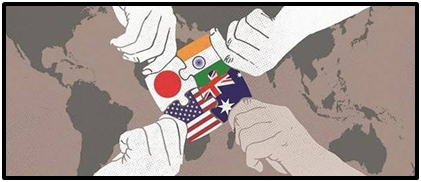
What is QUAD ?


QUAD known as The ‘Quadrilateral Security Dialogue’ (QSD), is a loosely formed strategic meeting among four countries. The countries are the United States of America (USA), India, Australia, and Japan. The QUAD aims to promote a free, open, prosperous, and inclusive Indo-Pacific region. The organization's inaugural conference occurred in 2007, adjacent to the Association of Southeast Asian Nations (ASEAN) meeting. Regarded as a coalition of maritime democracies, the QUAD conducts meetings, semi-annual summits, information sharing, and military exercises involving all member nations.


  • Formation of the QUAD

Since its establishment in 2007, the representatives for the four-member nations have met periodically. Japanese Prime Minister Shinzo Abe was the first to pitch the idea for the formation of QUAD in 2007.  In fact, its origins can be traced back to the evolution of Exercise Malabar and the 2004 Tsunami when India conducted relief and rescue operations for itself and neighbouring countries and was later joined by the US, Japan and Australia. Therefore, China issued formal diplomatic protests to the members of QUAD.

  •  Objectives of Quad:

The motive behind the QUAD is to keep the strategic sea routes in the Indo-Pacific free of any military or political influence. It is basically seen as a strategic grouping to reduce Chinese domination. The core objective of the QUAD is to secure a rules-based global order, freedom of navigation and a liberal trading system. The coalition also aims to offer alternative debt financing for nations in the Indo-Pacific region.

The QUAD leaders exchange views on contemporary global issues such as critical and emerging technologies, connectivity and infrastructure, cyber security, maritime security, humanitarian assistance, disaster relief, climate change, pandemic and education.

Further, QUAD members have also indicated a willingness to expand the partnership through a so-called QUAD Plus that would include South Korea, New Zealand, and Vietnam amongst others.

●     Significance of QUAD for India :

■ It is believed that the forum strategically counters China’s economic and military rise. Interestingly, if Chinese hostilities rise on the borders, India can take the support of the other Quad nations to counter the communist nation.

■ The member countries have launched several initiatives like the Asia-Africa Growth Corridor, the Blue Dot Network, and the Supply Chain Resilience Initiative to promote economic development in the region. India is mostly at the receiving end of investments by QUAD countries.

■ In addition, India can even take the help of its naval front and conduct strategic explorations in the Indo-Pacific region.

                          Contributed by:

Rajesh Barman

Rajesh is a 6th Semester student studying Political Science Hons. at Maynaguri College.

Source Links : https://vajiramandravi.com/quest-upsc-notes/quad/

https://www.business-standard.com/amp/about/what-is-quad

https://testbook.com/ias-preparation/quadrilateral-security-dialogue-quad-upsc-notes

https://www.insightsonindia.com/international-relations/bilateral-regional-and-global-groupings-and-agreements-involving-india-and-or-affecting-indias-interests/indo-pacific/quad/

Photo credits : https://images.app.goo.gl/rv2VqLi5s28pMoHJ8

https://images.app.goo.gl/dbNVusqZ19EJojs79

Sunday, February 4, 2024

Maldives' Diplomatic turmoil with India


India and the Maldives held second round of high-level core group meeting in New Delhi on February 2, 2024 on Male’s demand for the withdrawal of all Indian military personnel. The Maldivian foreign ministry claimed that the Indian government had agreed to pull out troops by May 10.

However, the External Affairs Ministry's report has 'no mention of troop withdrawals.' On the contrary, Ministry of External Affairs said, "Both sides also agreed on a set of mutually workable solutions to enable continued operation of Indian aviation platforms." At present, the relations between India and Maldives are not good and to understand why the relations of India and Maldives are trending here is some clarification.

India's relations with Maldives before this political turmoil

Relations between India and the Maldives have been genial, the two share ethnic, linguistic, cultural, religious, and commercial links since ancient times and enjoyed close and interdisciplinary relations. India was among the first to recognize Maldives after its independence in 1965 and established diplomatic ties with the country, just like Soviet Union did for India. 

Maldives had also consistently supported India on international issues and in the UN, Commonwealth, NAM and SAARC. In November 1988, during the Maldives coup attempt India had given its full support. India was also the first to assist the country during natural crisis like the 2004 tsunami and the water crisis in December 2014. India has also abundantly contributed to tourism in the Maldives, which makes up a major part of its economy being an island nation. 

In 2023, India surpassed the chart in terms of the number of tourists visiting the island nation.


India has always been an ally for this country and hence also had a big significant role to play. The previous president of Maldives, Ibrahim Mohammed Solih, has called India “the best friend...” of Maldives.

 What are the main reasons behind this diplomatic turmoil?

Mainly the reasons are divided into three subpoints-

At present there has been an, ‘Promotion of Reciprocal Relations' between China and Maldives. Both the countries announced their ties to a Strategic Cooperative Alliance, deepening their relationship.

Secondly, a trend of an ‘India-Out Campaign’ can be seen since last year’s presidential term, Maldivian politics has witnessed a campaign focused on an “India Out” platform, branding Indian presence as a threat to Maldivian sovereignty especially with the presence of Indian troops. The current Maldives’ President, Mohammed Miuzzu has set a deadline of 15th March, 2024, for the withdrawal of Indian troops. 

Lastly, the ‘tourism plot’ in the Maldives where a diplomatic dispute arose from derogatory comments directed towards the Indian PM after his promotional visit to the Lakshadweep islands. As a consequence, a boycott Maldives trend has been floating social media platforms of India as a response to this controversy.

To conclude, the Maldives government is taking swift conciliatory action by suspending ministers to reflect an effort to manage the crisis. Therefore, both countries are engaging in regular diplomatic meetings to rebuild trust. Decisions are being taken to resolve this diplomatic mess urgently.

Sources:

§  Hindustan Times website – https://www.hindustantimes.com/videos/world-news/india-spoils-chinas-maldives-plan-as-muizzu-changes-tune-from-withdraw-to-replace-troops-101706945871527.html

§  Ministry of External Affairs website - https://www.mea.gov.in/Portal/ForeignRelation/Maldives-January-2012.pdf

§  Deccan Herald Website –https://www.deccanherald.com/india/india-good-friend-of-maldives-key-initiatives-that-strengthened-ties-over-the-years-2841027

Image credit:

§  https://www.timesnownews.com/world/in-key-meeting-with-india-discussion-on-removal-of-troops-in-two-phases-by-may-maldives-article-107369138/amp

https://images.app.goo.gl/yRjCdrG96d7teaxu9

 Contributed by:

Arijit Singha Roy


Arijit is a Fourth semester student studying Political Science (Hons.) at Maynaguri College.

Saturday, February 3, 2024

What is Gujral Doctrine ?

The Gujral Doctrine, named after India's former Prime Minister Inder Kumar Gujral. He was an Indian diplomat , political and freedom activist who served as the 12th Prime Minister of India, from April 1997 to March 1998, outlines a five-point approach to India's foreign policy towards its South Asian neighbours.

The Gujral Doctrine is a set of five principles to guide the conduct of foreign relations with India’s immediate neighbours. These five principles arise from the belief that India’s stature and strength cannot be isolated from the quality of its relations with its neighbours. It, thus, recognises the supreme importance of friendly, cordial relations with neighbours.

▪ These principles are:

  • With neighbours like Bangladesh, Bhutan, Maldives, Nepal and Sri Lanka, India does not ask for reciprocity but gives and accommodates what it can in good faith and trust;
  • No South Asian country should allow its territory to be used against the interest of another country of the region;
  • No country should interfere in the internal affairs of another;
  • All South Asian countries must respect each other’s territorial integrity and sovereignty;
  • They should settle all their disputes through peaceful bilateral negotiations.

 ●     Implementation and Significance:

The Gujral Doctrine was outlined in a 1996 speech by Gujral and aimed to improve India's relations with its neighbours, which had faced challenges in the previous years. It emphasized building trust and cooperation through unilateral gestures and respecting the autonomy of smaller nations. While not formally adopted as official policy, the principles influenced India's approach to South Asia, leading to positive developments in relations with countries like Bangladesh and Nepal .

The doctrine continues to be discussed and referenced as a relevant framework for peaceful and mutually beneficial relationships in South Asia.

Written by:

Kunal Adhikary


Kunal is a student of Sixth Semester studying Political Science (Hons.) at Maynaguri College. 

Source: 

1. Foreign Policy of India by  V.N. Khanna.

2. “Gujral Doctrine of foreign policy “, Drishti IAS.         

Link: - https://www.drishtiias.com/daily-updates/daily-news-analysis/gujral-doctrine-of-foreign-policy%C2%A0%C2%A0%C2%A0

Photo credit: https://images.app.goo.gl/C2933ew988kqYn3L8


রাজনীতি কি শুধুই ক্ষমতার লড়াই, নাকি আমাদের প্রতিদিনের বেঁচে থাকা? গণতন্ত্র, যুবসমাজ ও আমার ভাবনা

সত্যি বলতে  রাজনীতি বিষয়টা নিয়ে আগে আমার অনেক ভুল ধারণা ছিল আমি ভাবতাম রাজনীতি মানেই তো টিভিতে দেখা চিৎকার চেঁচামিটি ভোটের আগে মিছিল আর ফে...